Ten cards, ten slots, and a layout that has been in use for about a century. It is the most useful spread in tarot and the one most often read badly — because people read the ten cards as ten separate meanings instead of one argument.
The layout
Six cards form a cross on the left; four form a column on the right. Card two is laid across card one, which is not decoration — it is the whole point of the spread.
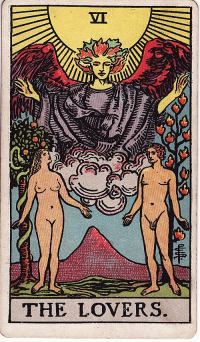 The Lovers rev.The Heart of the Matter
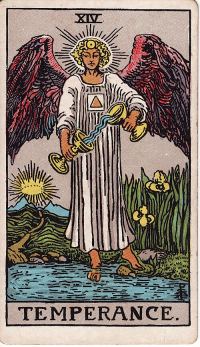 TemperanceThe Challenge (Crossing)
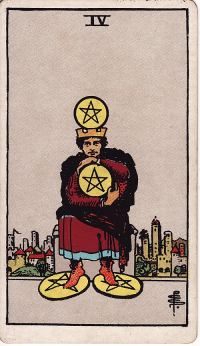 Four of Pentacles rev.The Foundation (Below)
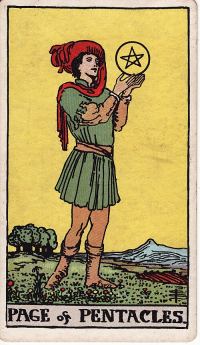 Page of PentaclesThe Past (Behind)
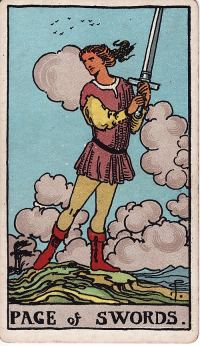 Page of SwordsThe Higher Power (Above)
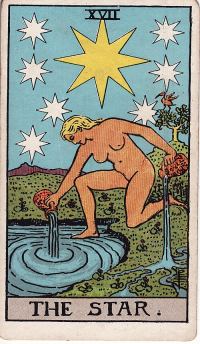 The Star rev.The Near Future (Before)
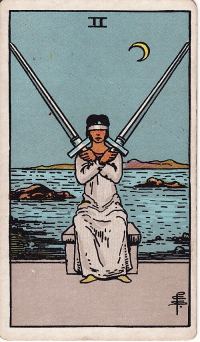 Two of Swords rev.Your Attitude (Self)
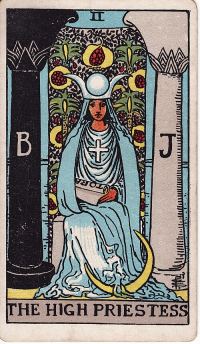 The High PriestessExternal Influences (Environment)
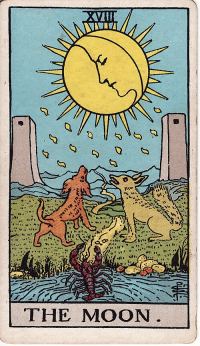 The MoonHopes & Fears
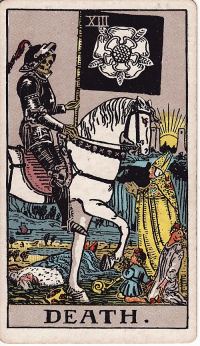 DeathThe Outcome
The ten positions
1 · The Heart of the Matter. What the question actually is, as opposed to what you asked. Frequently these differ.
2 · The Challenge. Laid across the first card, it is what is sitting on top of the situation. Not an enemy — often your own handling of it.
3 · The Foundation. The thing underneath, usually unconscious: the belief the whole situation is resting on.
4 · The Past. What has just left the room but is still shaping the furniture.
5 · The Higher Power. The best available version of the situation — what it looks like from outside your own head.
6 · The Near Future. The next few weeks if nothing changes. Short horizon on purpose.
7 · Your Attitude. How you are actually showing up, which is usually more influential than position 2.
8 · External Influences. Other people, money, timing, the job market — the parts that are not about you.
9 · Hopes & Fears. One slot for both, because in practice they are the same object seen from two sides.
10 · The Outcome. Where this lands if the advice in the spread is followed. Not fate. A trajectory.
How to read it without drowning
Read positions 1 and 2 first, as a pair. That pair is the reading’s thesis. Then 3 through 6 as a timeline. Then 7 through 9 as the human context. Position 10 last, and only after you have decided whether you like the answer.
When it is the wrong spread
If you cannot state your question in one sentence, the Celtic Cross will give you ten sentences of fog. If you already know what you are going to do, it will describe your decision back to you at length. It is a spread for situations, not for moods.